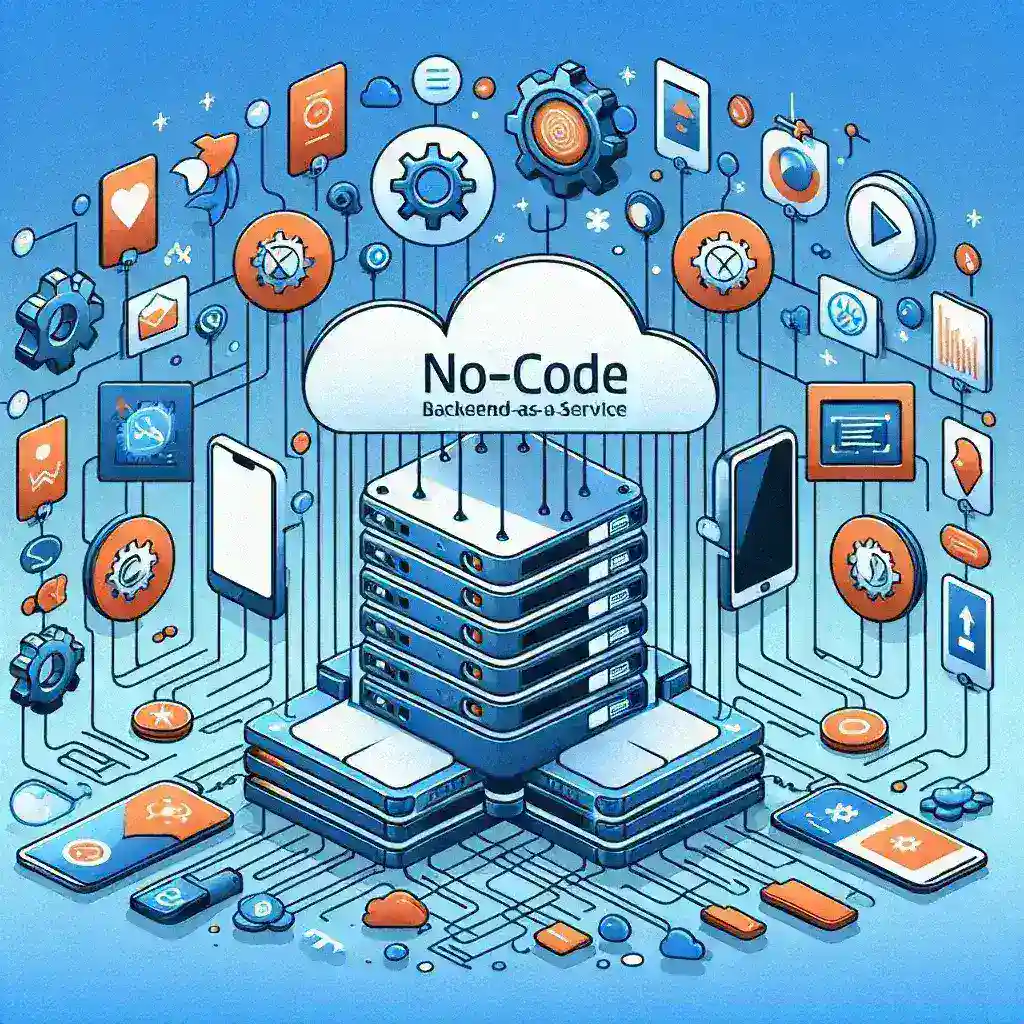
In today’s rapidly evolving digital landscape, the demand for faster application development has never been higher. Traditional backend development, while powerful, often requires extensive coding expertise and significant time investment. Enter no-code Backend-as-a-Service (BaaS) platforms – revolutionary tools that are transforming how developers approach application creation by eliminating the complexity of backend infrastructure management.
Understanding No-Code Backend-as-a-Service Platforms
No-code Backend-as-a-Service platforms represent a paradigm shift in software development methodology. These comprehensive solutions provide pre-built backend services through intuitive visual interfaces, allowing developers to focus on frontend user experience rather than server-side complexities. Unlike traditional development approaches that require extensive knowledge of databases, server management, and API creation, no-code BaaS platforms offer drag-and-drop functionality and automated configurations.
The fundamental principle behind these platforms lies in abstraction – they hide the technical complexity of backend operations while maintaining the functionality and scalability that modern applications demand. This approach democratizes application development, making it accessible to a broader range of professionals, including those without extensive programming backgrounds.
Key Features and Capabilities
Modern no-code BaaS platforms offer an impressive array of features designed to streamline development processes:
- Database Management: Visual database designers with automatic schema generation and relationship mapping
- Authentication Services: Pre-configured user management systems with social login integration
- Real-time Data Synchronization: Instant updates across multiple devices and platforms
- API Generation: Automatic REST and GraphQL API creation without manual coding
- File Storage: Scalable cloud storage solutions with built-in CDN capabilities
- Push Notifications: Cross-platform notification systems for enhanced user engagement
- Analytics Integration: Built-in analytics tools for performance monitoring and user behavior tracking
Advanced Security Features
Security remains paramount in no-code BaaS platforms. These solutions typically include enterprise-grade security measures such as data encryption, role-based access control, and compliance with international standards like GDPR and HIPAA. The platforms handle security updates automatically, ensuring applications remain protected against emerging threats without requiring manual intervention from developers.
Popular No-Code BaaS Platforms in the Market
Several platforms have emerged as leaders in the no-code BaaS space, each offering unique strengths and specialized features:
Firebase
Google’s Firebase stands as one of the most comprehensive BaaS solutions available. It provides real-time database capabilities, authentication services, hosting, and analytics in a unified platform. Firebase’s strength lies in its seamless integration with Google Cloud services and its robust real-time synchronization capabilities.
Supabase
Positioned as an open-source alternative to Firebase, Supabase offers PostgreSQL databases, real-time subscriptions, and authentication services. Its appeal lies in providing developers with more control over their data while maintaining the simplicity of no-code development.
Appwrite
Appwrite focuses on providing backend services for web and mobile applications with strong emphasis on developer experience. It offers self-hosted and cloud options, making it attractive for organizations with specific hosting requirements.
AWS Amplify
Amazon’s Amplify provides a comprehensive development platform that combines frontend and backend tools. Its integration with AWS services makes it particularly powerful for applications requiring enterprise-scale infrastructure.
Advantages of No-Code BaaS Platforms
Accelerated Development Timeline
The most significant advantage of no-code BaaS platforms is the dramatic reduction in development time. Projects that traditionally required months of backend development can now be completed in weeks or even days. This acceleration stems from the elimination of repetitive coding tasks and the availability of pre-built components.
Cost-Effective Solutions
By reducing the need for specialized backend developers and minimizing development time, no-code BaaS platforms offer substantial cost savings. Organizations can allocate resources more efficiently, focusing on user experience and business logic rather than infrastructure management.
Scalability Without Complexity
These platforms handle scaling automatically, adjusting resources based on application demand without requiring manual intervention. This automatic scaling ensures optimal performance while controlling costs, as organizations only pay for the resources they actually use.
Reduced Technical Debt
No-code BaaS platforms minimize technical debt by providing standardized, well-maintained backend services. Regular updates and maintenance are handled by the platform providers, ensuring applications remain current with the latest technologies and security standards.
Potential Limitations and Considerations
While no-code BaaS platforms offer numerous advantages, developers should be aware of potential limitations:
Vendor Lock-in Concerns
Relying heavily on a specific platform can create dependency issues. Organizations should carefully evaluate migration paths and data portability options before committing to a particular solution.
Customization Constraints
No-code platforms may not accommodate highly specialized or unique backend requirements. Complex business logic or unusual data processing needs might require traditional development approaches.
Performance Considerations
While generally efficient, no-code solutions may not match the performance of custom-optimized backend implementations for specific use cases. Applications with extreme performance requirements should carefully evaluate platform capabilities.
Best Practices for Implementation
Strategic Planning
Successful implementation begins with thorough planning. Organizations should clearly define project requirements, evaluate platform capabilities, and establish migration strategies. Understanding the long-term implications of platform choice is crucial for sustainable development.
Hybrid Approaches
Many successful projects combine no-code BaaS platforms with custom development where necessary. This hybrid approach leverages the speed and efficiency of no-code solutions while maintaining flexibility for specialized requirements.
Team Training and Adoption
Investing in team education ensures maximum benefit from no-code platforms. While these tools are designed for ease of use, understanding their capabilities and limitations enables more effective utilization.
Future Trends and Developments
The no-code BaaS landscape continues evolving rapidly, with several trends shaping its future:
AI Integration
Artificial intelligence is increasingly being integrated into no-code platforms, offering intelligent suggestions, automated optimization, and predictive scaling capabilities. This integration promises to make development even more efficient and accessible.
Enhanced Customization
Platform providers are continuously expanding customization options, offering more flexibility without sacrificing ease of use. This evolution addresses one of the primary limitations of early no-code solutions.
Industry-Specific Solutions
Specialized platforms targeting specific industries or use cases are emerging, offering pre-configured solutions for healthcare, finance, e-commerce, and other sectors with unique requirements.
Making the Right Choice
Selecting the appropriate no-code BaaS platform requires careful consideration of multiple factors including project requirements, team expertise, scalability needs, and budget constraints. Organizations should evaluate platforms based on their specific use cases rather than general popularity or feature lists.
The decision should also consider long-term implications, including data portability, vendor stability, and evolution roadmaps. Conducting proof-of-concept projects can provide valuable insights into platform suitability before making larger commitments.
Conclusion
No-code Backend-as-a-Service platforms represent a significant advancement in software development methodology, offering unprecedented speed and accessibility in application creation. While they may not replace traditional development entirely, they provide powerful tools for rapid prototyping, MVP development, and many production applications.
As these platforms continue to mature and evolve, they will likely become even more capable and flexible, further democratizing software development and enabling organizations to bring innovative solutions to market faster than ever before. The key to success lies in understanding their capabilities and limitations, choosing the right platform for specific needs, and implementing them strategically within broader development workflows.
For organizations looking to accelerate their development processes while maintaining quality and scalability, no-code BaaS platforms offer a compelling solution that bridges the gap between rapid development and robust functionality.

Lascia un commento