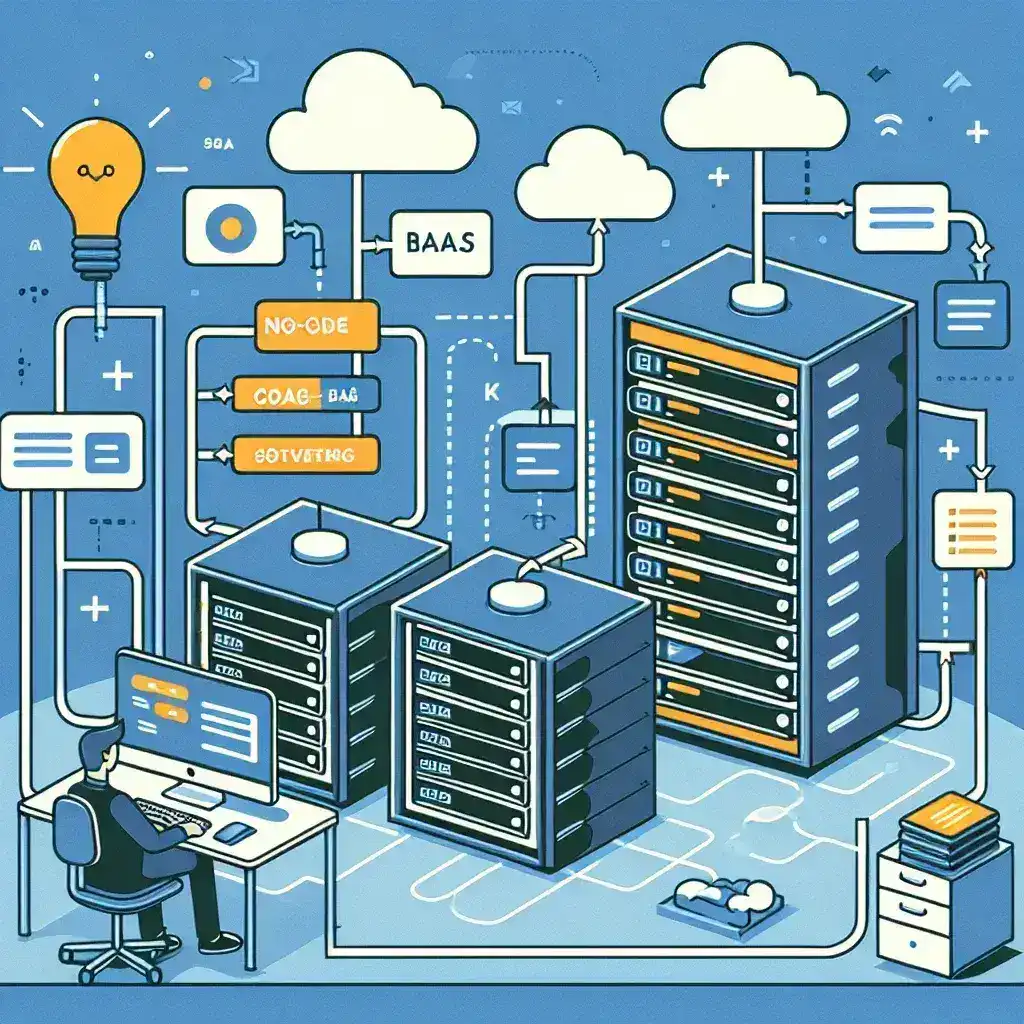
The software development landscape has undergone a dramatic transformation in recent years, with no-code Backend-as-a-Service (BaaS) platforms emerging as game-changing solutions that are reshaping how applications are built and deployed. These innovative platforms are democratizing backend development, enabling both seasoned developers and newcomers to create robust, scalable applications without the traditional complexities of server management and infrastructure configuration.
Understanding the No-Code Backend Revolution
No-code Backend-as-a-Service platforms represent a paradigm shift in application development methodology. Unlike traditional development approaches that require extensive coding knowledge for backend infrastructure, these platforms provide visual interfaces and pre-built components that allow users to construct sophisticated backend systems through intuitive drag-and-drop functionality and configuration panels.
The emergence of these platforms addresses a critical pain point in modern software development: the growing demand for rapid application deployment coupled with the shortage of experienced backend developers. According to recent industry statistics, organizations using no-code platforms report a 70% reduction in development time compared to traditional coding approaches, while simultaneously reducing development costs by up to 60%.
Core Components of No-Code BaaS Platforms
Modern no-code Backend-as-a-Service solutions encompass several essential components that work synergistically to provide comprehensive backend functionality:
Database Management Systems
These platforms typically offer visual database designers that allow users to create, modify, and manage database schemas without writing SQL queries. Advanced platforms provide automatic relationship mapping, data validation rules, and real-time synchronization capabilities across multiple data sources.
Authentication and Authorization Services
Security remains paramount in application development, and no-code BaaS platforms excel in providing robust authentication mechanisms. Users can implement multi-factor authentication, social login integrations, role-based access controls, and custom permission systems through simple configuration interfaces rather than complex security coding.
API Generation and Management
Perhaps one of the most powerful features of these platforms is their ability to automatically generate RESTful APIs based on database schemas and business logic rules. This eliminates the need for manual API development, testing, and documentation, significantly accelerating the development process.
Real-time Communication Features
Modern applications increasingly require real-time functionality, such as live chat, notifications, and collaborative features. No-code BaaS platforms provide built-in WebSocket support and push notification services that can be configured without complex server-side programming.
Advantages of Adopting No-Code Backend Solutions
The adoption of no-code Backend-as-a-Service platforms offers numerous compelling advantages that are transforming development workflows across industries:
Accelerated Time-to-Market
Traditional backend development often requires weeks or months of infrastructure setup, database design, and API development. No-code platforms compress this timeline to days or even hours, enabling rapid prototyping and faster product launches. This acceleration is particularly valuable in competitive markets where first-mover advantage is crucial.
Reduced Development Costs
By eliminating the need for specialized backend developers and reducing infrastructure management overhead, organizations can achieve significant cost savings. Small startups and enterprises alike benefit from lower development expenses and reduced ongoing maintenance costs.
Enhanced Collaboration
No-code platforms break down technical barriers between different team members. Product managers, designers, and business analysts can directly contribute to backend development without relying exclusively on technical developers, fostering improved collaboration and faster iteration cycles.
Scalability and Reliability
Leading no-code BaaS providers offer enterprise-grade infrastructure with automatic scaling, load balancing, and high availability features. This ensures that applications built on these platforms can handle growing user bases without manual infrastructure management.
Popular No-Code Backend Platforms in 2024
The no-code Backend-as-a-Service market has matured significantly, with several platforms emerging as industry leaders:
Firebase by Google
Firebase remains one of the most comprehensive BaaS solutions, offering real-time databases, authentication services, cloud functions, and hosting. Its integration with Google Cloud Platform provides enterprise-level scalability and reliability.
Supabase
Positioned as an open-source alternative to Firebase, Supabase provides PostgreSQL-based backend services with real-time subscriptions, authentication, and edge functions. Its SQL-first approach appeals to developers who prefer traditional relational database structures.
Appwrite
Appwrite focuses on providing self-hosted and cloud-based backend solutions with comprehensive SDK support for multiple programming languages and frameworks. Its emphasis on developer experience and extensive documentation makes it popular among technical teams.
AWS Amplify
Amazon’s Amplify platform offers full-stack development capabilities with powerful backend services, including GraphQL APIs, machine learning integrations, and seamless AWS service connectivity.
Implementation Strategies and Best Practices
Successfully implementing no-code Backend-as-a-Service platforms requires strategic planning and adherence to proven best practices:
Platform Selection Criteria
When choosing a no-code BaaS platform, organizations should evaluate several critical factors. Scalability requirements must align with projected growth, while integration capabilities should support existing technology stacks. Security certifications, compliance standards, and data residency requirements are particularly important for enterprise applications.
Data Architecture Planning
Despite the visual nature of no-code platforms, proper data architecture remains crucial. Teams should invest time in designing logical data relationships, establishing clear naming conventions, and planning for future schema evolution. This foundational work prevents technical debt and ensures long-term maintainability.
Security Configuration
While no-code platforms simplify security implementation, proper configuration is essential. Organizations should implement principle of least privilege access, regular security audits, and comprehensive backup strategies. Multi-environment setups (development, staging, production) help maintain security boundaries throughout the development lifecycle.
Challenges and Limitations
Despite their numerous advantages, no-code Backend-as-a-Service platforms present certain challenges that organizations must carefully consider:
Vendor Lock-in Concerns
Heavy reliance on proprietary no-code platforms can create vendor dependency risks. Organizations should evaluate migration paths, data export capabilities, and alternative platform options before committing to long-term implementations.
Customization Limitations
While no-code platforms excel at common use cases, they may struggle with highly specialized or complex business logic. Organizations with unique requirements might find themselves constrained by platform limitations.
Performance Considerations
No-code platforms often prioritize ease of use over performance optimization. Applications with high-performance requirements or complex computational needs might benefit from traditional custom development approaches.
Future Trends and Innovations
The no-code Backend-as-a-Service ecosystem continues evolving rapidly, with several emerging trends shaping its future direction:
AI-Powered Development
Artificial intelligence integration is transforming no-code platforms, enabling intelligent code generation, automated testing, and predictive scaling. These AI capabilities further reduce development complexity while improving application performance and reliability.
Edge Computing Integration
Modern no-code platforms are incorporating edge computing capabilities to reduce latency and improve user experiences. This trend enables globally distributed applications with localized data processing and storage.
Enhanced Integration Ecosystems
Platform providers are expanding their integration capabilities, offering seamless connectivity with third-party services, legacy systems, and emerging technologies. This trend reduces integration complexity and enables more comprehensive application development.
Measuring Success and ROI
Organizations implementing no-code Backend-as-a-Service platforms should establish clear metrics to measure success and return on investment:
Development velocity metrics track time-to-market improvements, while cost analysis compares traditional development expenses with no-code platform investments. User satisfaction scores and application performance benchmarks provide insights into solution effectiveness and end-user experience quality.
Team productivity measurements, including feature delivery rates and bug resolution times, help quantify the impact of no-code adoption on overall development efficiency. These metrics enable data-driven decisions about platform selection and implementation strategies.
Conclusion
No-code Backend-as-a-Service platforms represent a transformative force in modern software development, offering unprecedented opportunities to accelerate application delivery while reducing complexity and costs. As these platforms continue maturing and incorporating advanced technologies like artificial intelligence and edge computing, their impact on the development landscape will only grow stronger.
Organizations that strategically adopt no-code BaaS solutions position themselves to respond more rapidly to market demands, reduce development costs, and democratize application creation across their teams. However, success requires careful platform selection, proper implementation planning, and realistic expectations about capabilities and limitations.
The future of software development is increasingly pointing toward visual, intuitive development experiences that empower broader teams to create sophisticated applications. No-code Backend-as-a-Service platforms are at the forefront of this evolution, making backend development accessible to everyone while maintaining the scalability and reliability required for modern applications.

Lascia un commento